Softball’s Evolution: From Humble Beginnings to National Spotlight

Softball’s Evolution: From Humble Beginnings to National Spotlight

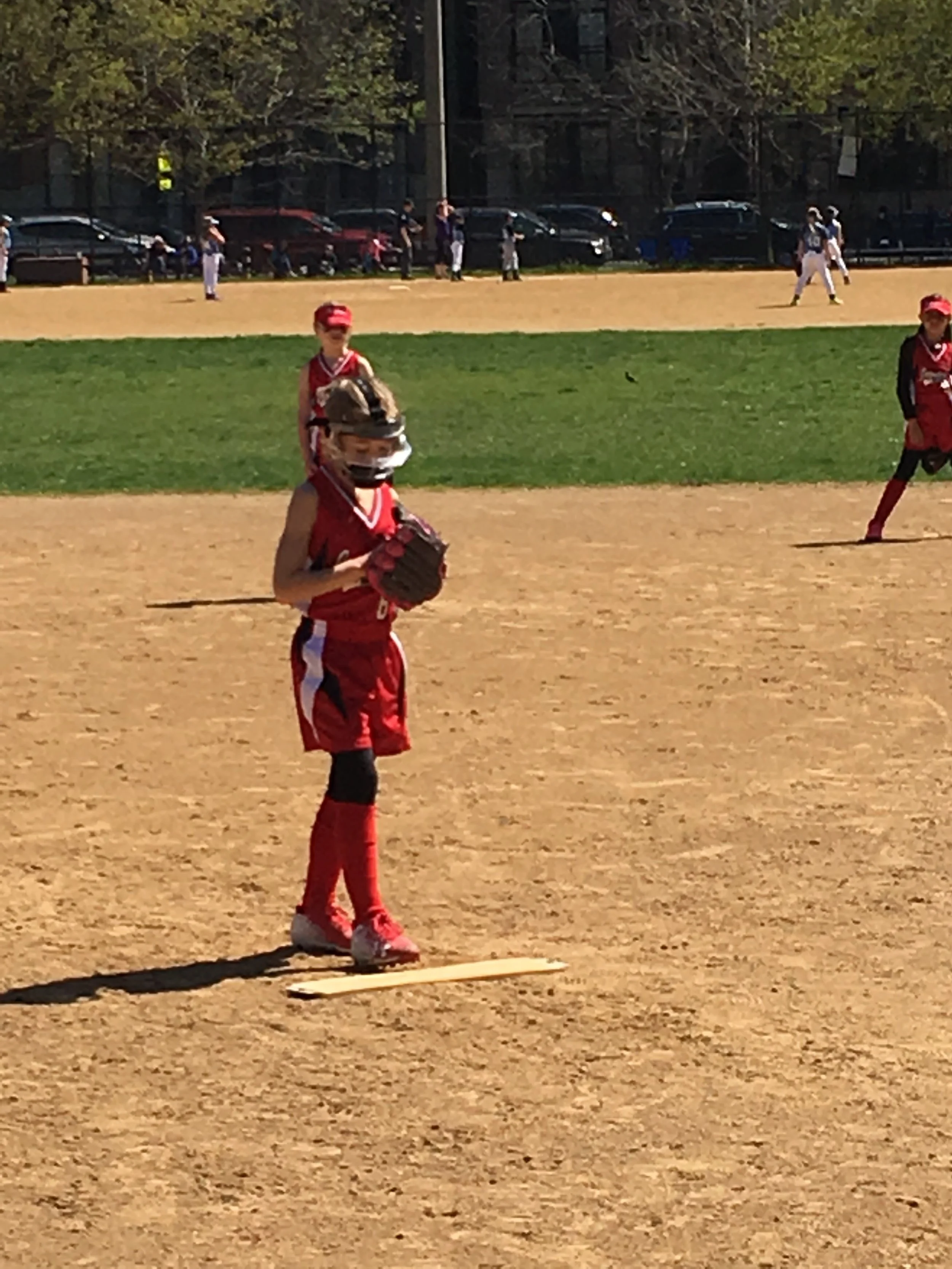
With the NCAA Women’s College World Series kicking off yesterday, I wanted to share a special story that was sent to us by Brad Albers, dad of Elisabeth Albers from Hamlin Park Lions 10U team. Elisabeth’s grandmother, Cindy Albers, has an incredible softball legacy—she played in the very first Women’s College World Series in 1969!

Her hometown newspaper featured a great article in 2022 about her journey and her role as a pioneer in a tournament that’s now watched by over 1.1 million people. It’s wild to think how far the game has come—and how women like Cindy helped lay the foundation.

A few things stood out to me from the article. Her attitude was truly inspiring.

Read More
14 Common Misconceptions About Pitching - Part 3 of 3

14 Common Misconceptions About Pitching - Part 3 of 3

In the last 10 years, only one team in the DI WCWS had pitchers from Illinois on it. As far as high school competition, the IHSA used to have a state bracket in which the winner of the city tournament went directly downstate. Unfortunately, the city schools lost too many games by too much of a margin, so they began to mix the city conference with the near suburbs to make the championships more competitive. The city's conference is improving though, with Marist winning 3 state championships since 2010 and a few schools sending players to university with softball scholarships.

11. “My daughter will reach her full potential by playing in local travel tournaments and on a city high school team. Illinois competition is enough to elevate her to the NCAA or the state finals.”

Read More

Become a Movement Pitch Expert by Doing This

Become a Movement Pitch Expert by Doing This

When throwing a rise ball, a pitcher must deliver the ball on the “upswing” of her arm circle, meaning a little bit later. To make it easier to get her palm underneath the ball and facing the sky, she must lean her body back towards second base at delivery. The reverse is true for a drop ball. She must lean forward to get her hand on top of the ball, palm facing downwards.

Once her body position and ball trajectory is correct, the Magnus Effect becomes relevant.

Read More

Getting Tired of Negativity? 9 Parts of a Pitcher Contract That You’ll Love

Getting Tired of Negativity? 9 Parts of a Pitcher Contract That You’ll Love

So many challenges, frustrations, and disappointments—whether for coaches, players, or parents—stem from vague expectations and a lack of communication throughout the season. Inspired by these teams and my own coaching experience, I’ve put together a set of guiding principles for pitchers. These rules help ensure that every pitcher understands her role, stays accountable, and approaches the game with the right mindset.

Read More

Calling the Game: The Coach, Catcher, or Pitcher?

Calling the Game: The Coach, Catcher, or Pitcher?

Erica Hanrahan

When it comes to deciding who should call the game, there are two very different schools of thought—and both have valid points. Before diving into the debate, though, I want to emphasize something I’m incredibly passionate about:

Pitchers need to have full autonomy to shake off a pitch or location call if they feel something else is more appropriate.

This autonomy is critical because pitchers need to own every pitch they throw. If they don’t like a pitch call for any reason, it’s on them to shake it off and get the pitch or location they believe in. That’s how you grow from being a thrower to becoming a pitcher. At the end of the day, the responsibility lies with the person throwing the ball—not the pitch caller.

Read More

3 Must-Haves to Make It at the Highest Level

3 Must-Haves to Make It at the Highest Level

After running our first successful college evaluation event with Coach Erica Hanrahan, I wanted to share with you some thoughts I had on playing at a high level before you get to college. 80% of current Practice Pro pitchers are eight grade an under. I believe there are three attributes an athlete must posses to reach A or B level travel play, or regional-level high school play.

I would never discourage anyone from learning to pitch because they probably weren’t going to pitch in the Olympics, but I do believe there are certain attributes and life circumstances a player must posses to play in college.

Read More

Don't Make These 5 Common Pitching Mistakes

Don't Make These 5 Common Pitching Mistakes

Let’s face it, pitching strikes isn’t easy. It often takes five to ten years for a player to develop the skills and strength needed to throw a ball over 60 mph with precision and movement. By avoiding the following mistakes, a pitcher can fast-track her journey to mastery.

DON’T...

Slow down your arm to pitch strikes.

Read More

Playing Time: A Method to Align Coaches, Parents, and Players

Playing Time: A Method to Align Coaches, Parents, and Players

What if you could make decisions based on what a player earned, not just on what you feel? What if you could take the pressure off yourself and let the work they put in decide who gets the ball? What if, when a player asked, "Why am I not pitching?" they understood, didn’t resent it, and just got back to work to get better? You’d have more peace. You’d have a better team.

Read More

What Should I Do During Practice, Exactly?

What Should I Do During Practice, Exactly?

Depending upon the season, the percentage break-down of maintenance, game prep and future practice differs. The closer a pitcher is  to the season, the more game prep and the less future learning she should do. The offseason is great for learning new things.

When you ask, “How much time do I spend teaching my daughter all of these new movement pitches when she can’t even throw a strike?” look to the chart below for the answer. Apply this formula to a day or week of practice, depending on how you like to schedule it out. 

Read More

College Coaches Recruit from Camps

College Coaches Recruit from Camps

Here are some interesting things I learned that will help you:
1. Many college coaches are recruiting most of their players from camps, not tournaments.
2. A lot of college coaches recruit families, not players.  They need cooperative parents and are attracted to players who come from well developed travel programs because they, and their parents, have been groomed on how to conduct themselves.
3. The biggest problem college coaches see with pitchers, and other players for that matter, is that they have no idea how to deal with failure and are not tough....

Read More

Help for Brave Parents Who Catch

Help for Brave Parents Who Catch

In lessons, I'll sometimes ask a parent who's catching for her daughter if she can see the spin on the ball. I'll ask if she saw a fundamental that could have been executed better. Most of the time, I get these answers to the question:

"It's hard to see if my daughter's follow-through is correct when the ball is flying at me at 50 miles an hour."

Read More

10 Compelling Reasons Why You Need Your Dad to Catch For You

10 Compelling Reasons Why You Need Your Dad to Catch For You

Growing up, my dad played an integral role in my softball journey. Without him, I wouldn’t have achieved what I did in sports. His support, along with that of my uncle, cousins, sister, and anyone who caught for me, was invaluable. Here’s why having someone, especially a dad, to catch for you can make all the difference. In my personal experience my dad was the one with the best hand-eye coordination, as opposed to my mom, so I’m going to share with you the benefits I got from working with him!

Read More

A Step-by-Step Guide to Mental Toughness

A Step-by-Step Guide to Mental Toughness

How can you tell if you are mentally tough? Is it your endurance, your ability to come from behind, or strike out the last batter of the game? You might think a person who controls their emotions as tough, or one who can maintain complete focus amid a crowd of screaming fans.

I believe a mentally strong pitcher has a plan and sticks to it. She helps her teammates recover from their errors. Perhaps most importantly she understands the game, knowing when she’s in a crucial situation and can execute during those times.

Read More

Embarrassing Mistakes, Patrick Murphy, and How to Muster Courage

Embarrassing Mistakes, Patrick Murphy, and How to Muster Courage

Good things happen when you sit at the front of the class. I'm living proof of that.

When I was a kid growing up, adults and teachers would tout sitting in the front of the class as the holy grail of all serious learners. And it stood to reason that if you sit in the front of the class, you must pay close attention - as there is no one to hide behind and less opportunity to distract yourself without the teacher taking notice. And though I accepted this as truth, I didn't always like to sit in the front of the class. It's not always comfortable to make direct eye contact with the teacher or be "called on" more often, so I always thought the middle of the room was safer. But nonetheless, I knew that teachers wanted their best pupils to sit in the front of the class, and because I cared about being a great student, I embraced the uncomfortable and leaned in.

Read More

3 Ways to Know if You "Have" a Pitch

3 Ways to Know if You "Have" a Pitch

As soon as a player is able to throw with a good arm circle, has decent posture, and throws at her fullest effort she's ready to learn the change up and movement pitches.

Even 10 year-olds can learn movement pitches. If I were to wait until a pitcher perfected her fastball to teach her a curveball, we might be waiting until she is a high school or even college!

Read More

What I Learned from Wasserman at the NFCA Conference

What I Learned from Wasserman at the NFCA Conference

I want to share as much as possible with you, and there is too much for one post, so I’ll start with what applies to us most - the Wasserman High-Level Throwing program. We started this plyo-ball program for the first time during the offseason. Players experienced with pitching school completed the exercises every class, working on things like “separation,” “body awareness,” and “patterning.” I wanted to test this program and see how it went, then the plan was to go from there.

Read More

3 Principles of Psychology You Can Use to Improve Your Mechanics

3 Principles of Psychology You Can Use to Improve Your Mechanics

“Practice to get better.”

“Be mentally tough.”

Sometimes I take all the things I learned for the mental game of softball for granted. I think they are very obvious, but did you know they came from somewhere? Actual psychologists throughout history introduced and studied these concepts. They came to evidence-based conclusions about what works and what doesn’t. Their conclusions were so influential, in fact, that they were woven into the foundation of all our sports so much so that we don't even notice them!

Read More