From the Cage to the Season: High School Athletes Level Up

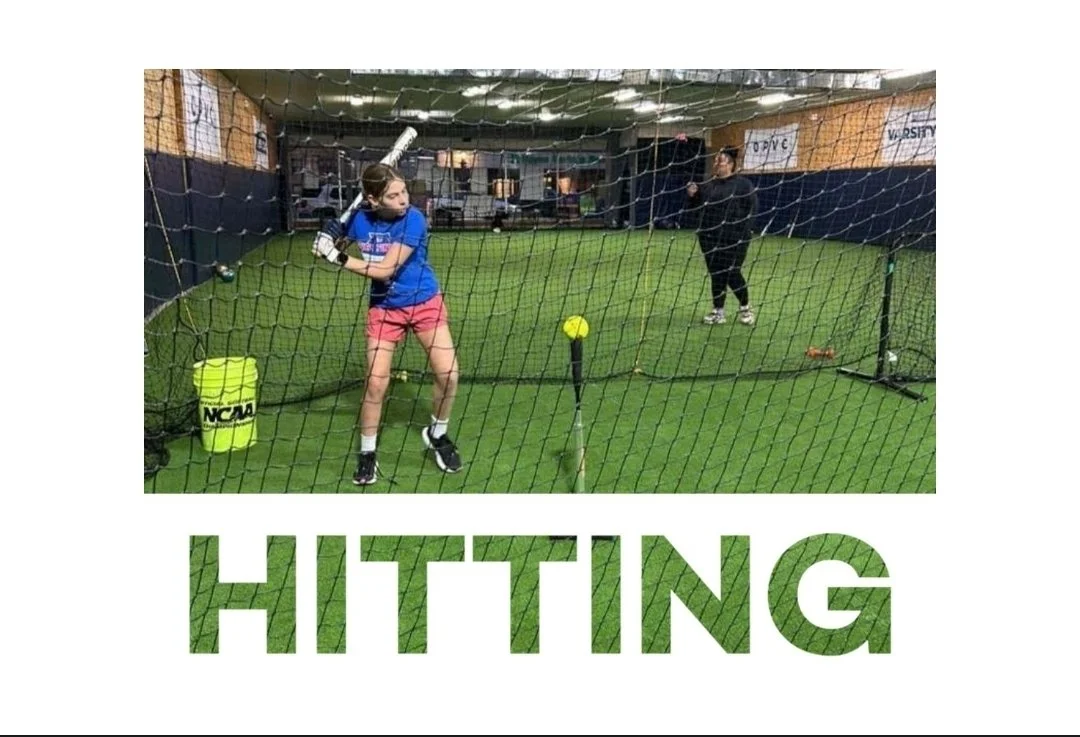
When we introduced batting to Practice Pro, it got a lot of people talking. More importantly, it got a lot of people swinging! Our young athletes have excelled on both sides of the plate over the last year with Lead Batting Instructor, Coach Marisa, and her knowledgeable and talented assistants. In this past Pre-Season session that is quickly coming to a close, we decided to try our hand with the live pitching and batting combo class, serving more of our high school aged athletes. This class has been a catalyst to many of our pitchers and hitters hurling and blasting their way into the high school season upon us.

It became evident quite quickly that Coach Marisa had a gift with reaching the high schoolers, motivating them to increase their pop times and power rankings. Not only did we see these metrics increase, but we saw a stretching of mindsets happening across our batters. Up at the plate, confidence and aggression tripled, causing epic battles with our versatile pitchers.

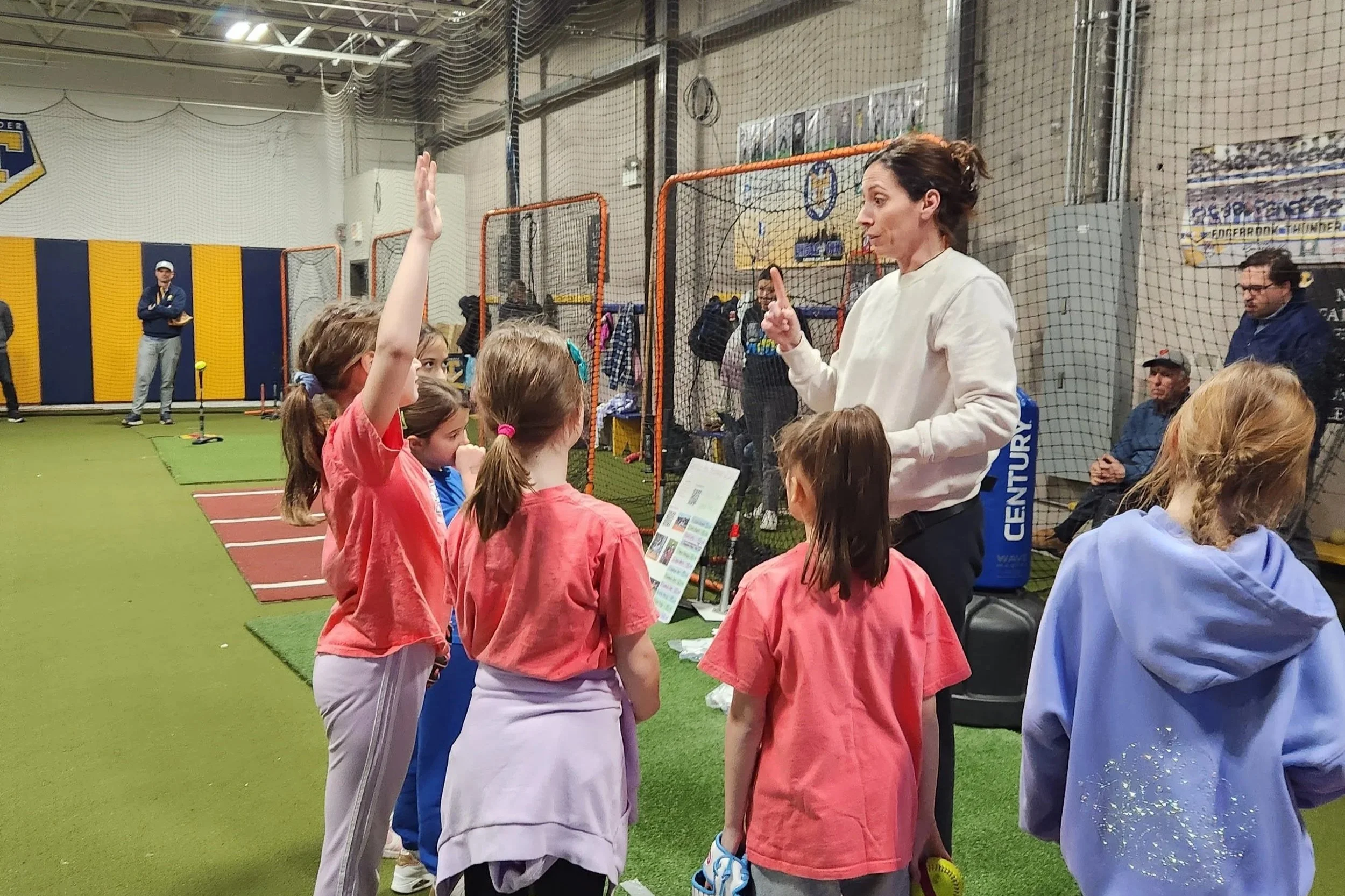
As Pre-Season is saying goodbye, so is our Live Session Combo Class (it will be back!). But not to worry, Coach Marisa is embarking on the next stage of in-season batting training for our hungry and motivated high school athletes. Practice Pro has just launched the High School HITTERS-TO-BATTERS Program, exclusively available for high schools in the Chicago area looking to boost their batting performance this year with a training program designed and implemented by our expert batting instructor herself, Coach Marisa. In this program, Coach Marisa comes into your high school at the invitation of your coach. Northside College Preparatory High School has already begun their journey with Coach Marisa, and in the words of one of their assistant varsity coaches: “This is truly Coach Marisa’s sweet spot. She was amazing at our first session.” -Carl Breving.

What exactly will Coach Marisa & Practice Pro do for your players? Here are the three main pieces you will receive through her tailored hitting program:

1. Movement, Skill & Responsibility
Training builds athletic movement patterns, technical skill, and personal accountability while reinforcing team execution and role awareness.
2. Situational IQ + Physical Skill
Game understanding and physical ability grow together. As athletes improve individually (and as a team), their ability to impact team success increases.
3. Mental Toughness Through Leadership
Mental toughness is cultivated through self control, confidence, and leadership, empowering athletes to compete with resilience and intention.

Coach Marisa will combine all of the best elements of our tried and true batting instruction here at Practice Pro and sync it into a hitting circuit and mindset approach offensive that will take your team to new heights.  

Coach Marisa says it best in her Coaching Mission Statement: “My goal is to help athletes transition from simply hitting to truly batting. My instruction will provide a place where mechanics, mindset, and strategy work together. The result will be players who understand the moment, control their emotions, and compete with purpose every time they step into the box.”

Do you think this is right for your high school team? Contact Practice Pro Owner, Abby Hanrahan, at abby@practice-pro.com or (708) 334-3871 today!

Mental vs. Physical: The Bricks We Carry

Mental vs. Physical: The Bricks We Carry

This week at pitching school we taught a mental game that just clicked.

It was built around an analogy. This week, every player drew four large bricks on a piece of paper. Inside each brick they wrote down a pitching mistake they had made. Some wrote “walked a batter.” Others wrote “hit a girl.” Some wrote “threw to the wrong base.” Once the bricks were filled in, we went around the room and asked a simple question: what did you learn from that mistake?

The lesson was this: mistakes are like bricks. If you carry them around, they are heavy. They weigh you down. They are useless. But if you learn from them, you can use them to build something great— a foundation, a wall, even a house. The same brick that drags you down can also build you up.

Read More

Forget One-size-Fits-all: 2 Strategies You Need to Jump On

Forget One-size-Fits-all: 2 Strategies You Need to Jump On

There are two very powerful schools of thought for how pitchers ought to attack the strike zone to be successful.

  1. Attack the strike zone directly

  2. Paint corners and live in the rivers

How can both be correct when they are in direct contradiction to one another? Which option ought pitchers pay heed?

To get to the bottom of this question, since I work with all of you at lessons instead of games, I went back to all of my notes from previous pitching conventions where I was able to listen to philosophies on pitch calling from the elite coaches in our game: Lonnie Alameda (Florida State), Larissa Anderson (Missouri), Beth Torina (LSU), Missy Lombardi (Oregon), Karen Weekly (Tennessee), and Stephanie VanBracklr (Alabama) just to name a few.

Read More

The Intermediate Guide to Mechanics

The Intermediate Guide to Mechanics

To me, the intermediate stage is defined by one specific transition: moving from knowing what to do to being able to do it consistently without thinking. Beginners are learning the language of pitching. Advanced pitchers don’t have to think about that language at all anymore. Intermediate pitchers are in the middle, translating what they know into what they can repeat.

At this stage, a pitcher might know how to get into reverse posture, but she can’t do it every pitch. She might leap off the mound sometimes but still step when she’s tired, distracted, or feeling pressure. Resistance shows up on one pitch and disappears on the next. Mechanics still require conscious effort, and pitchers often mentally check in with every part of their delivery instead of letting the sequence flow naturally. The goal here isn’t perfection—it’s consistency.

Read More

Pitching Guide for the Wary Player

Pitching Guide for the Wary Player

Let's face it; there are no shortcuts to pitching perfection.  It's like diet and exercise. You can't be Arnold Schwarzenegger by pumping iron once a week for two years. You can't lose those 10 pounds by reading a couple of health articles and including celery into one meal a day.  You're not going to be the first 8 year old in the history of all post coach-pitch leagues to throw the ball anywhere near the plate by pitching once a week in games.  Don't fret though!

Read More

The Hidden Difference Between Division I and Power-4 Athletes

The Hidden Difference Between Division I and Power-4 Athletes

I was recently listening to one of my favorite podcasts, The Tim Ferriss Show, hosted by Tim Ferriss, a business author and entrepreneur known for interviewing top-performing people across sports, business, and life. His goal is to “deconstruct world-class performers,” and his recent interview with NFL-great, Steve Young was amazing. I’m not much of a football fan, and to be honest didn’t know who Steve Young was, but I surely do now! know why he was so successful after listening to this interview. I thought so much applied to softball and pitching that I wanted to pass this along. .

He talked about how there is a difference in athleticism. The players in the NFL are the top in the world. He also talked about how the error margins were so much smaller. , in college football, receivers are often open. In the NFL, no one is open. I’ve actually heard professional golfers say the same thing, or those that didn’t make it to the tour but were close. My old golf instructor who didn’t make the tour, but his friend did said, everything was the same, but the other guy could wouldn’t miss that one last short putt, I’d miss it one more time than him. Less room for error, less margins. 


Read More

3 Fun Stats About Pitching

3 Fun Stats About Pitching

Missy Lombardi was trying to figure out what made Michigan so dominant in 2015. As the head coach of Oaklahoma she was battling the WCWS eventual runner-up. She came up with these three factors. Then, with the help of her sports psychologist, invented a way to chart the points. Lombardi found that three things determine the dominance of a pitcher:

Read More

From First Lesson to Confident Competitor: How We Develop Pitchers Over Time

From First Lesson to Confident Competitor: How We Develop Pitchers Over Time

At Practice Pro, we believe great pitchers are developed through a clear, patient, and proven process. Pitching isn’t something that happens overnight, and there isn’t one magical moment where everything suddenly “clicks.” You don’t come for one ten-week session and instantly start throwing perfect strikes or never miss high again. Instead, pitchers grow through consistent instruction, intentional practice, and learning to understand where they are in their own development. Our program is built around a long-term path that honors how young athletes learn, how the brain and body work together, and how confidence grows through repetition, success, and time.

Read More

A Late Bloomer’s Guide to Hard Work: Lessons from the Mound

A Late Bloomer’s Guide to Hard Work: Lessons from the Mound

As a pitching instructor now, I’m constantly trying to help young players discover that link much earlier than I did. Parents often ask how to get their daughters to practice on their own without nagging, and I smile because I remember being that kid who needed to be pushed. I didn’t become self-initiated until college. Growing up, I practiced only when I was told to, and even then, not with much purpose

Read More

Pitching: The Good, the Bad, and the Ugly

Pitching: The Good, the Bad, and the Ugly

*As published in Fastpitch Magazine February 2020

I stood on the mound my sophomore year in college as the opposing team cheered in the dugout.  The hitter looked confident strutting up to the batter's box. She took extra time to knock the dirt off of her cleats before she put the bat up to her shoulder. Then she settled in and stared me in the eye. I stood up taller, followed my pre-pitch routine, and delivered my blazing fast curve ball right towards the - “BALL ONE!” Okay, no problem.  I beared down, focused on my catcher’s mitt and fired again.  “BALL TWO!” Although two balls in a row were not ideal, it is nothing that any good pitcher can not handle.  When the next two pitches buzzed in as “BALL THREE!” and “BALL FOUR!” the cheers from the opposing dugout resounded even louder. As the good Brian Cain says, “So what, next pitch,” that saying formulated then in my brain.

Read More

Top Reasons People Succeed Without the Win

Top Reasons People Succeed Without the Win

In our lives, there are very few things that can fit everyone’s definition of fun.

Some people LOVE amusement parks while others loathe the thought of steep drops and fast coasters. Some people love risky adventures like sky diving, bungee jumping, parasailing, and zip lining while others think these activities are horrifying. Some people think an evening snuggled in front of the TV with a bag of popcorn is the perfect Friday night while others would call that kind of weekend boring.

Are “things” just fun or not fun? Or is personal perspective the denominator? I would argue that a person’s mindset determines fun more than any other predictor. So how does this apply to practicing pitching and performing during pressure filled games? I believe: Everything.

Read More

How to Save Money on Pitching Equipment

How to Save Money on Pitching Equipment

Pitching can get expensive fast — between lessons and all the gear your instructor recommends (sorry about that), it can feel like you’re constantly swiping your card. But here’s the good news: you can get creative, save a ton of money, and still have all the tools you need to become a great pitcher.

Below is a list of the most common pitching tools we use at Practice Pro — and my favorite tips for how to make, find, or substitute them without breaking the bank.

Read More

Is Fall Ball Making Pitching Better or Worse?

Is Fall Ball Making Pitching Better or Worse?

Every fall, softball comes back to life after a late summer break — it’s that in-between season where players dust off their gloves, coaches shuffle lineups, and everyone gets a little extra time on the field before winter hits. But there’s one question I hear every year: Is fall ball actually making pitchers better… or worse?

People often look back fondly on the “glory days,” when kids played different sports each season instead of one sport year-round. Back then, there was no fall ball — the season didn’t start until January or later — and you could still be considered a committed team member while giving your full attention to each sport in its turn. But times have changed. Now, it can feel like if you skip fall ball, you’re seen as uncommitted or risk falling behind.

Read More

Big Things Are Happening at Practice Pro! New Classes, New Tools & More

Big Things Are Happening at Practice Pro! New Classes, New Tools & More

This fall at Practice Pro, we’re leveling up in every way — new programs, new ways to get your practice in, and new opportunities for players to learn, and compete together. Whether you’ve been with us for years or you’re thinking about joining, here’s a look at all the exciting things happening right now across our locations.

College Recruiting Cohort with Coach Erica Hanrahan

This week, our Coach Erica Hanrahan — a 13-year college coaching veteran who guided her teams to nine NCAA Division III postseason appearances as a head coach, kicked off our College Recruiting Cohort.

This program helps families navigate the recruiting process with confidence — from understanding timelines and communication rules to building player profiles and identifying the right-fit schools. It’s real-world insight from someone who’s coached at the highest levels of the game.

Read More

Why ‘Standing Tall’ Matters: Turning Momentum into Speed

Why ‘Standing Tall’ Matters: Turning Momentum into Speed

Do you ever notice when a pitcher sometimes falls over forward after she pitches? She looks like she’s off balance. You’ll hear a coach yell out after every few balls, “Stand tall!”

This has to do with her stride and how she is failing to harness all of the power she created through her drive off of the mound. Harnessing your power with your stride is equally as important as gaining momentum. Strides are for resistance, balance, and accuracy. If, you want to gain velocity, you must practice a great stride.

Read More

Finding Your Force: Lessons from the Camino de Santiago

Finding Your Force: Lessons from the Camino de Santiago

Every great journey changes you—and my most recent one was 500 miles across Spain with nothing but a backpack, sore feet, and faith to guide me.

For the past five weeks, I stepped away from summer lessons to walk the Camino de Santiago, an ancient pilgrimage stretching from St. Jean Pied de Port in France to the tomb of St. James the Apostle in Santiago, Spain. So as we step into this offseason together, I challenge you to ask yourself: What is your potential in softball?

Read More

Her Worst Nightmare About Softball Come to Life

Her Worst Nightmare About Softball Come to Life

Here is a short story that I'm sure you can relate to, especially if it's after the end of your first season as a softball parent/coach. If you read through to the end of this story you will find out how to avoid some big mistakes in the future.

It's your daughters first kid-pitch game. She's seen her friends pitch a few times and has maybe tried it with you in the backyard once. Today is a big game with the rival team: Reliable Auto vs. Rose Salon. The inning starts and she nervously creeps out of the dugout and dawdles up to the mound. All eyes are on her as she feels small out there on the big field. She throws her first pitch - a grounder.

Read More

Can't Throw a Strike? Try This.

Can't Throw a Strike? Try This.

If your pitchers keep accidentally throwing inside and hitting batters, the real problem might not be control—it might be the arm circle.

Poor accuracy often stems from an arm circle that is off-line or inconsistent from pitch to pitch. To be a consistent pitcher, mechanics must be identical—every single time. That starts with building a simple, repeatable motion (lessons help here) and then duplicating it relentlessly outside of games. The more times a pitcher executes a perfect arm circle, the more likely she is to repeat it under pressure. Unfortunately, the same is true for a flawed one.

Read More

The Three Greatest Games in Practice Pro History

The Three Greatest Games in Practice Pro History

We train for a long time—10 weeks in the offseason, 10 more in preseason. The winter days get shorter, and the drills start to feel longer. Pitchers throw again and again, while a parent or catcher squats endlessly behind the plate. It can feel like a never-ending road.

But eventually, we get to Game Day.

At Practice Pro, we know pitching isn’t just about drills and mechanics. It’s about handling pressure. And the only way to really train for that is to simulate it. So on the last day of every session, instead of more drills, we draw games from a hat and compete.

Yes, there are small prizes—maybe a piece of candy, maybe a few extra stars—but that’s not the point. What matters is how it feels when everyone’s watching and it’s your turn. That pause before you pitch. That moment when everything you’ve been working on shows up—or doesn’t.

After nearly a decade of testing, tweaking, and teaching thousands of pitchers, here are the three best games we’ve ever played:

Read More

5 Things I Got Wrong About Sportsmanship at Summer Camp

5 Things I Got Wrong About Sportsmanship at Summer Camp

Two years ago, one of our camps ended on a tough note. It challenged us in ways we didn’t expect—and taught us a valuable lesson we’ll never forget. With our first camp this year just a week away, I’m excited to share a blog post I wrote afterward that explains what happened, what we changed, and how it transformed our camps for the better.

Since making this shift, every camp has ended on a high note—full of energy, teamwork, and fun. What we learned might be helpful in your own coaching, parenting, or mentoring journey.

Read More